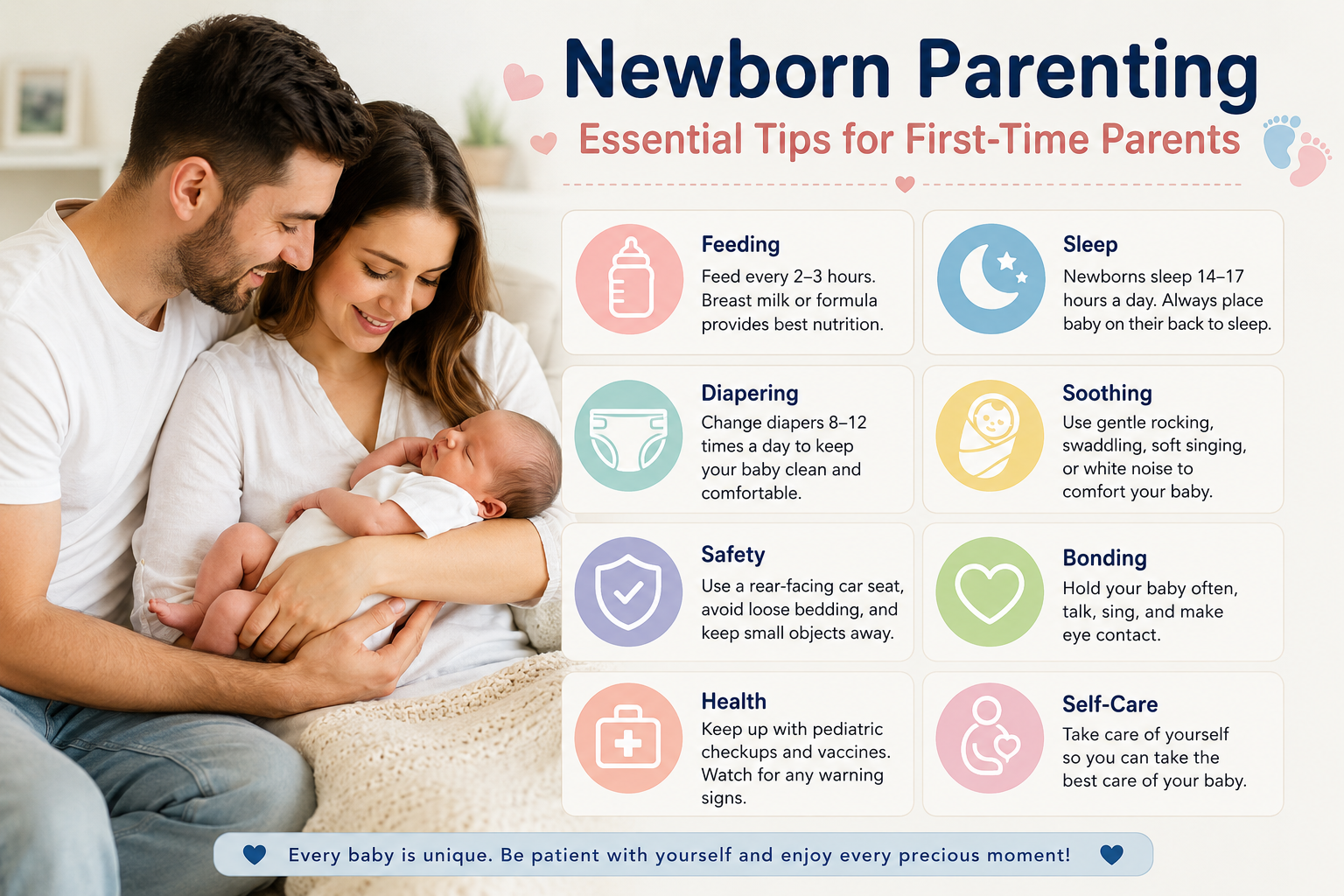
Welcoming a newborn baby into your family is one of life’s most exciting experiences. At the same time, it can feel overwhelming, especially for first-time parents. From feeding schedules and sleep routines to diaper changes and safety concerns, caring for a newborn involves learning many new skills.
This newborn parenting guide covers the most important aspects of caring for your baby during the first few months. Whether you’re preparing for your baby’s arrival or already navigating parenthood, these practical tips can help you feel more confident and prepared.
Understanding Your Newborn!
Newborns are babies from birth to approximately two months old. During this period, babies spend most of their time sleeping, feeding, and adjusting to life outside the womb.
Common newborn behaviors include:
- Sleeping 14–17 hours per day
- Feeding every 2–3 hours
- Frequent diaper changes
- Crying to communicate needs
- Gradual development of vision and hearing
Every baby develops at their own pace, so avoid comparing your child to others.
Feeding Your Newborn
Proper nutrition is essential for healthy growth and development.
Breastfeeding
Breast milk provides ideal nutrition for newborns and contains antibodies that help protect babies from illness.
Breastfeeding tips:
- Feed on demand whenever your baby shows hunger cues.
- Ensure a proper latch for comfortable feeding.
- Stay hydrated and maintain a balanced diet.
- Seek support from a lactation consultant if needed.
Formula Feeding
Formula is a healthy alternative when breastfeeding is not possible or preferred.
Important guidelines:
- Follow preparation instructions carefully.
- Sterilize bottles properly.
- Feed according to your pediatrician’s recommendations.
- Never microwave formula bottles.
Signs your baby is getting enough nutrition include regular weight gain and frequent wet diapers.
Newborn Sleep Tips
Sleep is a major concern for many parents.
Safe Sleep Recommendations
The American Academy of Pediatrics recommends:
- Place babies on their backs for every sleep.
- Use a firm mattress.
- Keep the crib free from blankets, pillows, and toys.
- Share a room, not a bed.
Establishing Healthy Sleep Habits
While newborns do not follow strict schedules, you can encourage healthy sleep by:
- Creating a calm bedtime environment.
- Keeping nighttime interactions quiet.
- Exposing your baby to natural daylight during the day.
Remember that waking during the night is completely normal for newborns.
Diapering and Hygiene
Newborns typically need frequent diaper changes throughout the day.
Diaper Changing Basics
- Change diapers promptly after they become wet or soiled.
- Clean the diaper area gently.
- Apply diaper cream when needed.
- Wash your hands before and after changing diapers.
Bathing Your Baby
Newborns do not need daily baths.
Bathing recommendations:
- Two to three baths per week are usually sufficient.
- Use warm water and mild baby soap.
- Support your baby’s head and neck carefully.
Always supervise your baby during bath time.
Soothing a Crying Baby
Crying is your newborn’s primary way of communicating.
Common reasons babies cry:
- Hunger
- Wet diapers
- Fatigue
- Gas discomfort
- Need for comfort
Helpful soothing techniques:
- Gentle rocking
- Swaddling
- Soft singing
- Skin-to-skin contact
- White noise
If crying becomes excessive or unusual, contact your pediatrician.
Newborn Health and Wellness
Regular health care is essential during your baby’s first year.
Pediatric Checkups
Routine visits help monitor:
- Weight gain
- Growth milestones
- Feeding progress
- Vaccinations
- Overall development
Never skip scheduled wellness visits.
Warning Signs to Watch For
Contact your healthcare provider if your newborn experiences:
- Difficulty breathing
- High fever
- Poor feeding
- Severe lethargy
- Persistent vomiting
Early medical attention can prevent complications.
Baby Safety Essentials
Safety should be a top priority from day one.
Car Seat Safety
Every newborn should travel in a properly installed rear-facing car seat.
Safety tips:
- Follow manufacturer instructions carefully.
- Ensure straps fit snugly.
- Never leave your baby unattended in a vehicle.
Home Safety
Simple precautions include:
- Keeping small objects out of reach.
- Avoiding loose bedding.
- Monitoring room temperature.
- Installing smoke and carbon monoxide detectors.
Creating a safe environment helps reduce risks and provides peace of mind.
Bonding With Your Newborn
Strong parent-child bonding supports emotional and cognitive development.
Ways to strengthen your connection:
- Hold your baby frequently.
- Practice skin-to-skin contact.
- Talk and sing to your baby.
- Make eye contact during feedings.
- Respond consistently to your baby’s needs.
These everyday interactions help your baby feel secure and loved.
Caring for Yourself as a Parent
Newborn care can be demanding, making self-care extremely important.
Tips for parents:
- Rest whenever possible.
- Accept help from family and friends.
- Maintain healthy eating habits.
- Stay hydrated.
- Discuss concerns with healthcare professionals.
Remember that adjusting to parenthood takes time.
Common Questions About Newborn Parenting
How often should I feed my newborn?
Most newborns feed every two to three hours, although individual needs may vary.
How much sleep does a newborn need?
Newborns generally sleep between 14 and 17 hours each day.
When should I call a doctor?
Contact your pediatrician if your baby develops a fever, refuses feeds, or shows signs of illness.
Conclusion
Newborn parenting is a journey filled with learning, growth, and unforgettable moments. While the early weeks may seem challenging, understanding your baby’s basic needs can help you navigate this stage with confidence.
Focus on feeding, sleep, safety, bonding, and regular healthcare. Most importantly, trust yourself and remember that every parent learns through experience. With patience, love, and support, you can provide the best possible start for your newborn’s life.
FAQs for Newborn Parenting Article
Q1. How often should a newborn eat?
Most newborns need feeding every 2–3 hours, whether they are breastfed or formula-fed. Always watch for hunger cues such as rooting, sucking on hands, or fussiness.
Q2. How many hours does a newborn sleep each day?
Newborns typically sleep between 14 and 17 hours per day, although sleep is usually broken into short periods throughout the day and night.
Q3. How often should I change my newborn’s diaper?
You should change your newborn’s diaper whenever it becomes wet or soiled. Most babies need 8–12 diaper changes daily.
Q4. When can I start giving my newborn water?
Newborns do not need water. Breast milk or formula provides all the hydration they need during the first six months.
Q5. Is it normal for newborns to cry a lot?
Yes. Crying is a newborn’s primary way of communicating hunger, discomfort, tiredness, or the need for attention and comfort.
Q6. What is the safest sleeping position for a newborn?
Babies should always be placed on their backs to sleep on a firm mattress with no pillows, blankets, or stuffed toys in the crib.
Q7. How often should I bathe my newborn?
Most newborns only need a bath two to three times per week. Daily baths are usually unnecessary.
Q8. How can I tell if my newborn is getting enough milk?
Signs include regular weight gain, frequent wet diapers, and contentment after feedings.
Q9. When should I contact a pediatrician?
Seek medical advice if your newborn has a fever, difficulty breathing, poor feeding, unusual sleepiness, or persistent vomiting.
Q10. How can parents bond with their newborn?
Bonding can be strengthened through skin-to-skin contact, talking, singing, cuddling, and responding consistently to your baby’s needs.