It is important to remember that every baby grows at a different pace. Some babies reach milestones early, while others take more time. This guide explains common baby milestones in the first year so parents can better support healthy growth and development.
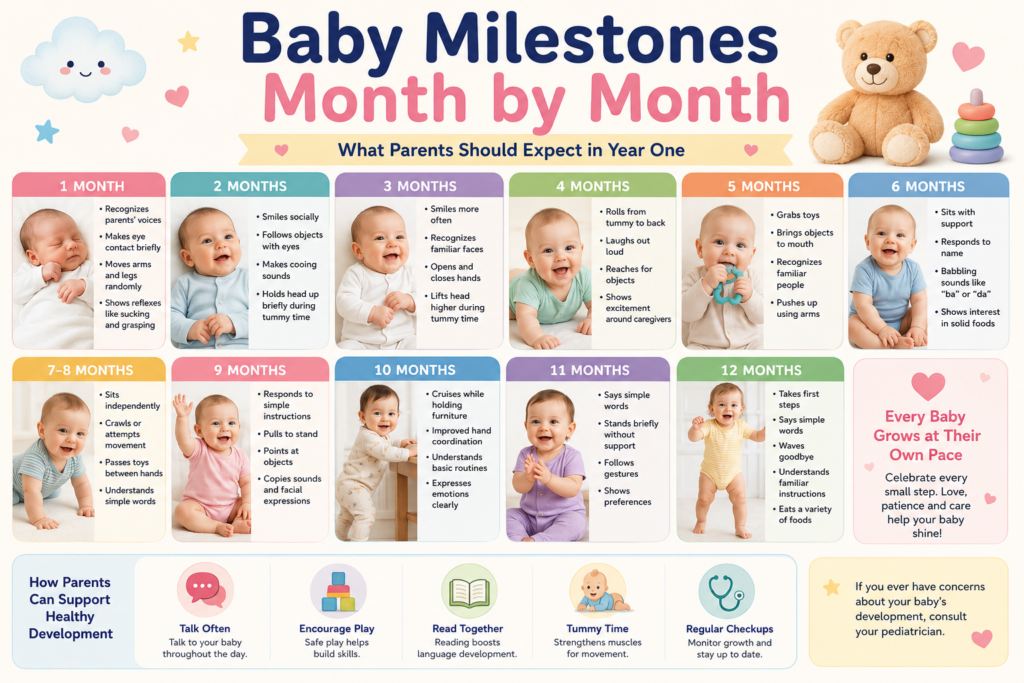
Why Baby Milestones Matter?
Baby milestones are skills most babies develop around a certain age. These include physical growth, communication, social skills, movement, and learning abilities.
Baby Milestones: 0–1 Month
In the first month, babies spend most of their time sleeping, feeding, and adjusting to the outside world.
Common milestones include:
- Recognizing parents’ voices
- Making eye contact briefly
- Moving arms and legs randomly
- Showing reflexes such as sucking and grasping
- Turning toward sounds
Parents can support development through skin-to-skin contact and talking softly to their baby.
Baby Milestones: 2 Months
By two months, babies start becoming more aware of people and surroundings.
Expected milestones:
- Smiling socially
- Following objects with eyes
- Making cooing sounds
- Holding head up briefly during tummy time
Daily tummy time helps strengthen neck muscles.
Baby Milestones: 3 Months
Three-month-old babies become more active and curious.
Common signs include:
- Smiling more often
- Recognizing familiar faces
- Opening and closing hands
- Responding to sounds
- Lifting head higher during tummy time
Babies also begin enjoying colorful toys and gentle interactions. Learn more about why babies cry a lot
Baby Milestones: 4 Months
Many parents notice major changes around four months.
Typical baby development milestones:
- Rolling from tummy to back
- Laughing out loud
- Reaching for objects
- Showing excitement around caregivers
Babies may also start sleeping for longer stretches at night.
Baby Milestones: 5 Months
At five months, movement and curiosity continue growing.
Common milestones:
- Grabbing toys
- Bringing objects to mouth
- Recognizing familiar people
- Pushing up using arms
Exploration becomes an important part of learning.
Baby Milestones: 6 Months
Six months is often a major developmental stage.
Most babies begin:
- Sitting with support
- Responding to their name
- Babbling sounds like “ba” or “da”
- Showing interest in solid foods
Parents often introduce first foods around this time after discussing with healthcare providers.
Baby Milestones: 7–8 Months
During seven and eight months, babies become more mobile.
Expected milestones:
- Sitting independently
- Crawling or attempting movement
- Passing toys between hands
- Understanding simple words
Some babies may experience stranger anxiety during this period.
Baby Milestones: 9 Months
Nine-month-old babies often show stronger communication skills.
Common development signs:
- Responding to simple instructions
- Pulling to stand
- Pointing at objects
- Copying sounds and facial expressions
Interactive games like peekaboo support learning.
Baby Milestones: 10 Months
At ten months, babies become more confident movers.
Milestones may include:
- Cruising while holding furniture
- Improved hand coordination
- Understanding basic routines
- Expressing emotions clearly
Many babies enjoy exploring their environment.
Baby Milestones: 11 Months
By eleven months, personality traits become more noticeable.
Expected milestones:
- Saying simple words
- Standing briefly without support
- Following gestures
- Showing preferences for toys or activities
Language development often grows quickly during this stage.
Baby Milestones: 12 Months (1 Year)
The first birthday is a major milestone for babies and parents.
Common one-year baby milestones include:
- Taking first steps
- Saying simple words
- Waving goodbye
- Understanding familiar instructions
- Eating a wider variety of foods
Many babies become more independent around one year.
How Parents Can Support Healthy Baby Development
Supporting baby milestones month by month does not require expensive tools. Everyday interactions make a big difference.
Helpful habits include:
1. Talk to Your Baby Often
Hearing language supports communication skills.
2. Encourage Safe Play
Playtime improves movement, problem-solving, and learning.
3. Read Books Together
Reading helps language development from an early age.
4. Provide Tummy Time
Tummy time strengthens muscles needed for crawling and sitting.
5. Attend Regular Checkups
Routine appointments help monitor growth and development.
When Should Parents Be Concerned?
Every baby develops differently. However, parents may want professional advice if their baby consistently misses multiple milestones or loses previously learned skills.
Examples include:
- No smiling by several months
- Limited eye contact
- Difficulty responding to sounds
- Delayed movement development
Early support can help address concerns.
Final Thoughts on Baby Milestones Month by Month
Understanding baby milestones month by month helps parents feel more prepared during the first year. Small changes, from first smiles to first steps, are important parts of development.
Remember that growth is not a competition. Babies learn at different speeds, and individual differences are normal. Supporting your baby with love, patience, healthy routines, and regular care can help create a strong foundation for lifelong development.
Every milestone tells a story — and your baby’s journey is only beginning.
FAQs: Baby Milestones Month by Month
1. What are baby milestones month by month?
Baby milestones month by month are common developmental skills babies usually reach during their first year, including smiling, rolling over, sitting, crawling, talking, and walking.
2. When should babies start smiling?
Most babies begin social smiling around 6–8 weeks (2 months), although timing can vary from baby to baby.
3. At what age do babies usually sit without support?
Many babies learn to sit without support between 6 and 8 months, depending on their development pace.
4. When do babies start crawling?
Babies often start crawling around 7–10 months, but some skip crawling and move directly toward standing or walking.
5. When should parents expect a baby’s first words?
Simple words like “mama” or “dada” may appear around 10–12 months, though language development differs for every child.