Baby Sleep Schedule by Age: What New Parents Should Know?
Baby sleep changes quickly during the first year. Understanding a baby sleep schedule by age can help parents create routines, reduce stress, and support healthy development.
This guide explains baby sleep schedules from 0 to 12 months.
Why Baby Sleep Matters
Brain development
Physical growth
Mood regulation
Learning and memory
Healthy feeding patterns
1.) Newborn Sleep Schedule (0–3 Months)
Newborns sleep a lot but not on a predictable schedule.
Average Sleep:
14–17 hours daily
Wake Window:
45–90 minutes
Naps:
Multiple short naps throughout the day
Example Schedule:
7:00 AM – Wake + feed
8:00 AM – Nap
10:00 AM – Feed + awake time
11:00 AM – Nap
1:00 PM – Feed
2:00 PM – Nap
4:00 PM – Feed
5:00 PM – Nap
7:00 PM – Evening routine
8:00 PM – Sleep (with night wakings)
2.) Baby Sleep Schedule (3–6 Months)
Around this stage, babies begin sleeping longer at night.
Average Sleep:
12–16 hours daily
Wake Window:
1.5–2.5 hours
Naps:
3–4 naps daily
Example Schedule:
7:00 AM – Wake + feed
8:30 AM – Morning nap
11:00 AM – Feed
12:30 PM – Nap
3:00 PM – Short nap
6:30 PM – Bedtime routine
7:00 PM – Sleep
Helpful Changes:
Parents may notice:
- Longer nighttime sleep
- More predictable naps
- Earlier bedtime works better
3.) Baby Sleep Schedule (6–9 Months)
Many babies move toward 2–3 naps daily.
Average Sleep:
12–15 hours
Wake Window:
2–3.5 hours
Example Schedule:
7:00 AM – Wake
9:30 AM – Morning nap
1:30 PM – Afternoon nap
6:30 PM – Bath + feeding
7:00 PM – Bedtime
Sleep Challenges at This Age:
Some babies experience:
- Sleep regression
- Teething
- Separation anxiety
This is common and usually temporary.
4.) Baby Sleep Schedule (9–12 Months)
Older babies often transition to 2 naps daily.
Average Sleep:
11–14 hours
Wake Window:
3–4 hours
Example Schedule:
7:00 AM – Wake
10:00 AM – Nap
2:00 PM – Nap
7:00 PM – Bedtime
Many babies sleep longer stretches overnight, but occasional waking is still normal.
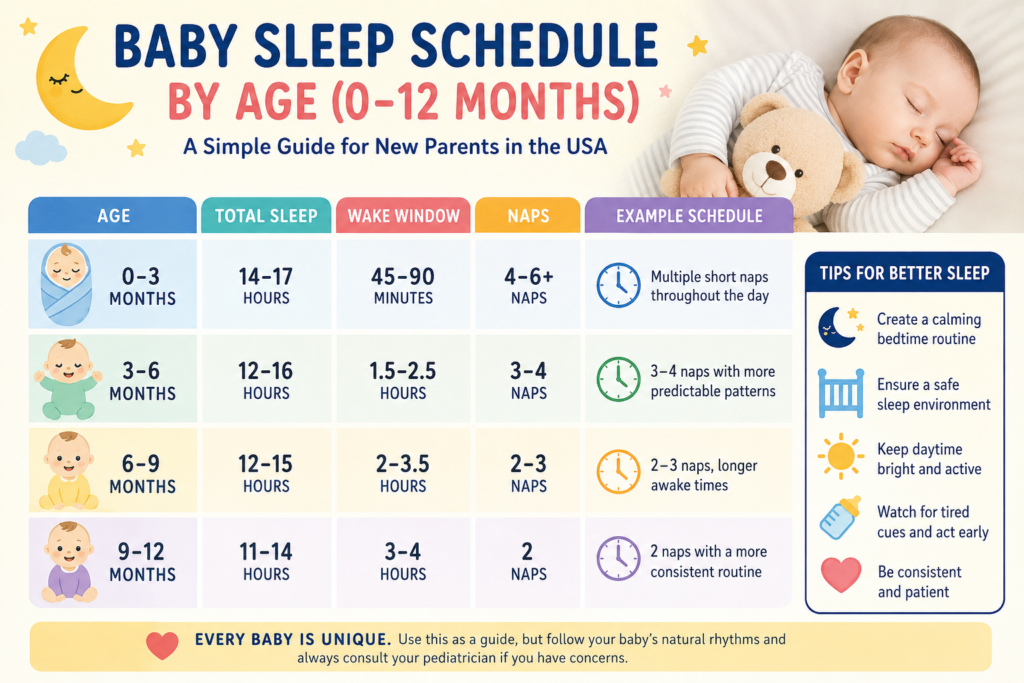
| Age | Total Sleep | Wake Window | Naps |
|---|---|---|---|
| 0–3 months | 14–17 hrs | 45–90 min | 4–6+ |
| 3–6 months | 12–16 hrs | 1.5–2.5 hrs | 3–4 |
| 6–9 months | 12–15 hrs | 2–3.5 hrs | 2–3 |
| 9–12 months | 11–14 hrs | 3–4 hrs | 2 |
How to Create a Healthy Bedtime Routine
Babies thrive with consistency.
Try this simple bedtime routine:
- Warm bath (optional)
- Change diaper and pajamas
- Feed baby
- Read a short book
- Dim lights
- Gentle rocking or cuddles
- Put baby down sleepy but awake
Repeating the same steps every night helps babies recognize sleep time.
Common Baby Sleep Questions Parents Ask
Why does my baby wake up every hour?
Possible reasons include:
- Hunger
- Growth spurts
- Teething
- Sleep regression
- Illness
Frequent waking can be normal depending on age.
When do babies sleep through the night?
Some babies sleep longer by 4–6 months, but every child develops differently.
Should I wake my baby for feeds?
For newborns, pediatricians may recommend waking for feeds until weight gain is established.
Always follow your healthcare provider’s advice.
Final Thoughts
A perfect baby sleep schedule does not exist. Some babies sleep early, others need extra comfort. What matters most is creating routines, responding to your baby’s needs, and adjusting expectations as they grow.
If your baby’s sleep feels unpredictable, remember: changes are normal during the first year.
Small routines repeated daily often become better sleep habits over time.
FAQs
What is the best bedtime for babies?
Most babies do well with bedtime between 6:30 PM and 8:00 PM, depending on age.
How many naps should a 6-month-old take?
Usually 2–3 naps daily.
Are sleep regressions real?
Yes. Temporary sleep disruptions often happen during developmental changes.
Can an overtired baby sleep less?
Yes. Overtired babies sometimes struggle to fall asleep or stay asleep.
Please share your thoughts or if you have any questions let us know.