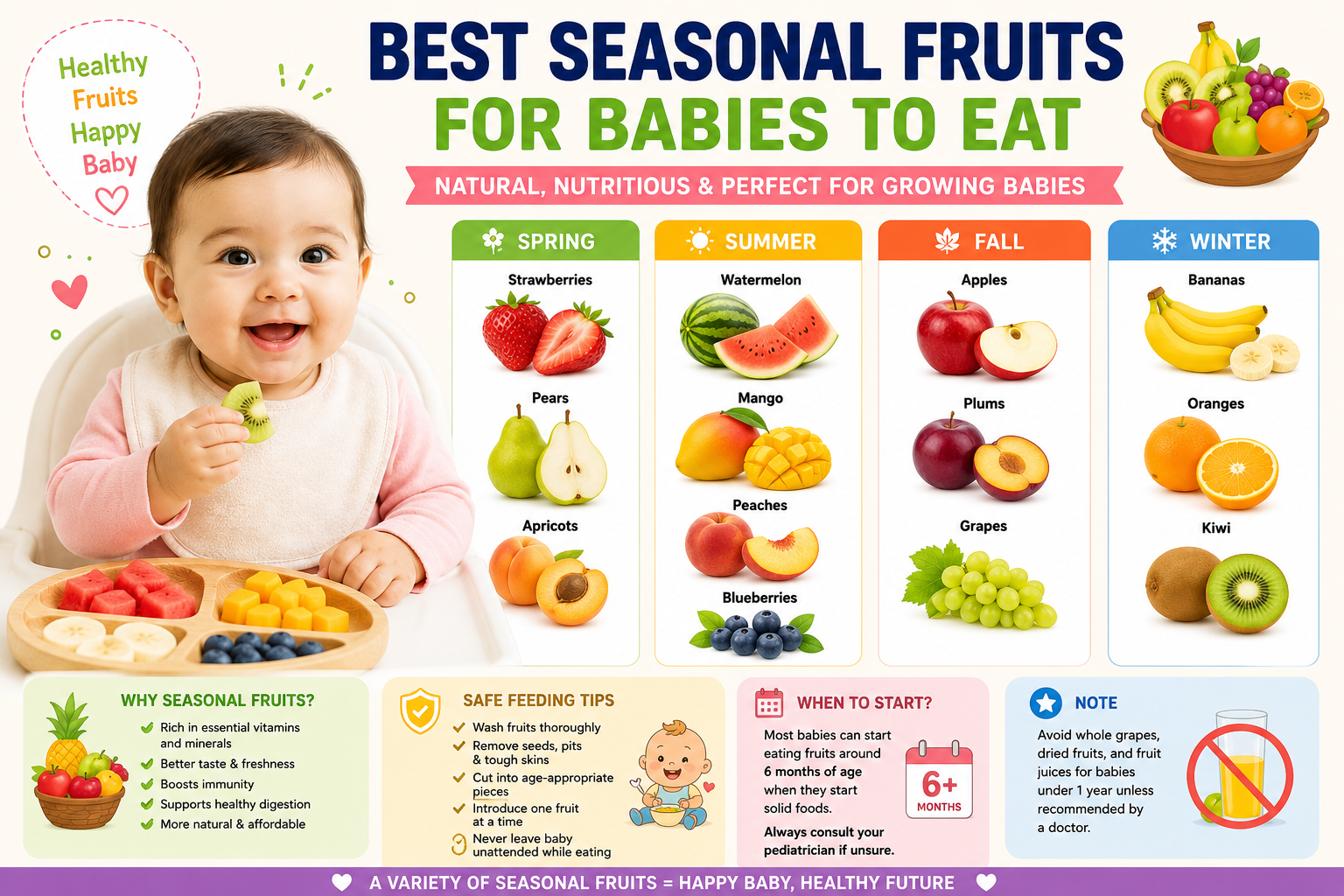
Introducing fruits to your baby’s diet is an exciting milestone. Seasonal fruits are often fresher, more nutritious, and naturally flavorful compared to fruits that are stored for long periods. They provide essential vitamins, minerals, antioxidants, and fiber that support healthy growth and development.
If your baby has started solid foods, choosing the right seasonal fruits can help build healthy eating habits while supporting immunity, digestion, and overall well-being.
In this guide, we’ll explore the best seasonal fruits for babies, their nutritional benefits, and safe ways to serve them.
When Can Babies Start Eating Fruits?
Most babies can begin eating fruits around 6 months of age when they start solid foods. Always introduce one new fruit at a time and wait 3 to 5 days before introducing another. This helps identify any possible allergic reactions.
Consult your pediatrician if your baby has a history of allergies or special dietary needs.
Best Spring Fruits for Babies
1. Strawberries
Strawberries are packed with vitamin C, antioxidants, and fiber.
Benefits:
- Supports immune health
- Helps with iron absorption
- Promotes healthy skin
How to Serve:
- Pureed for younger babies
- Finely mashed
- Soft pieces for older babies
2. Pears
Pears are gentle on the stomach and easy to digest.
Benefits:
- Rich in fiber
- Helps prevent constipation
- Provides vitamin C and potassium
How to Serve:
- Steamed and mashed
- Pear puree
- Soft ripe slices
3. Apricots
Apricots are a great source of vitamins A and C.
Benefits:
- Supports healthy vision
- Promotes immune function
- Contains antioxidants
How to Serve:
- Cooked and pureed
- Mashed when fully ripe
Want to learn more about why Babies Cry A Lot
Best Summer Fruits for Babies
4. Watermelon
Watermelon is one of the most hydrating fruits for babies during hot weather.
Benefits:
- High water content
- Contains vitamins A and C
- Helps keep babies hydrated
How to Serve:
- Seedless watermelon puree
- Small soft cubes for older babies
5. Mango
Mango is often called the “king of fruits” and is loved by many babies.
Benefits:
- Rich in vitamin A
- Supports eye development
- Contains fiber for digestion
How to Serve:
- Fresh mango puree
- Mashed ripe mango
- Small soft pieces
6. Peaches
Peaches are naturally sweet and nutrient-dense.
Benefits:
- Contains vitamins A and C
- Supports healthy skin
- Easy to digest
How to Serve:
- Peeled and pureed
- Soft slices for self-feeding babies
7. Blueberries
Blueberries are considered a superfood.
Benefits:
- Rich in antioxidants
- Supports brain development
- Helps strengthen immunity
How to Serve:
- Mashed thoroughly
- Mixed into yogurt
- Pureed for younger babies
Best Fall Fruits for Babies
8. Apples
Apples are among the first fruits many parents introduce.
Benefits:
- Rich in fiber
- Supports digestive health
- Contains beneficial antioxidants
How to Serve:
- Steamed apple puree
- Unsweetened applesauce
- Soft cooked apple pieces
9. Plums
Plums can help babies who experience occasional constipation.
Benefits:
- High fiber content
- Supports digestion
- Contains vitamins A and C
How to Serve:
- Pureed
- Mashed ripe plum
10. Grapes
Grapes contain valuable nutrients but should always be served safely.
Benefits:
- Rich in antioxidants
- Supports hydration
- Contains vitamin K
How to Serve:
- Peeled and mashed
- Cut into very small pieces for older babies
Best Winter Fruits for Babies
11. Bananas
Bananas are one of the easiest fruits to introduce.
Benefits:
- Rich in potassium
- Provides energy
- Easy to digest
How to Serve:
- Mashed banana
- Banana puree
- Mixed with oatmeal
12. Oranges
Oranges provide a significant amount of vitamin C.
Benefits:
- Supports immune health
- Helps iron absorption
- Provides hydration
How to Serve:
- Small seed-free segments
- Freshly squeezed orange pulp
13. Kiwi
Kiwi is loaded with nutrients and antioxidants.
Benefits:
- High vitamin C content
- Supports digestion
- Rich in fiber
How to Serve:
- Mashed kiwi
- Pureed kiwi
- Small soft pieces
Fruits to Introduce Carefully
While fruits are healthy, some require extra care:
- Whole grapes can be a choking hazard.
- Citrus fruits may cause mild irritation in some babies.
- Dried fruits can be difficult to chew.
- Avoid fruit juices for babies under one year unless recommended by a healthcare professional.
Safe Fruit Feeding Tips for Babies
Follow these important safety guidelines:
- Wash fruits thoroughly before serving.
- Remove seeds, pits, and tough skins.
- Cut fruits into age-appropriate sizes.
- Introduce one new fruit at a time.
- Watch for signs of allergies.
- Never leave a baby unattended while eating.
How Often Should Babies Eat Fruit?
Fruits can be included daily as part of a balanced diet. However, they should not replace vegetables, grains, proteins, and healthy fats. Offering a variety of foods helps babies receive complete nutrition and develop diverse taste preferences.
Final Thoughts
Seasonal fruits are an excellent addition to your baby’s diet. They provide natural sweetness, essential nutrients, and hydration while supporting healthy growth and development. From summer favorites like watermelon and mango to winter staples like bananas and oranges, each season offers nutritious options for your little one.
Remember to introduce fruits gradually, prepare them safely, and encourage variety. A colorful selection of seasonal fruits can help your baby develop healthy eating habits that last a lifetime.
Frequently Asked Questions (FAQs)
What is the best first fruit for a baby?
Bananas, pears, and apples are commonly recommended as first fruits because they are easy to digest and gentle on a baby’s stomach.
Can babies eat seasonal fruits every day?
Yes, babies can enjoy seasonal fruits daily as part of a balanced diet.
Which fruit helps with baby constipation?
Pears, plums, prunes, and peaches are known to support healthy digestion and may help relieve constipation.
Are organic fruits better for babies?
Organic fruits can reduce exposure to certain pesticides, but thoroughly washed conventional fruits are also safe and nutritious.
Can a 6-month-old eat mango?
Yes, ripe mango can be served as a smooth puree or mashed fruit for babies starting solids.
Every baby develops at their own pace, and introducing seasonal fruits is a wonderful way to support healthy growth and nutrition. If you have any questions about feeding your baby, introducing new foods, or creating a balanced meal plan, feel free to contact us. We are always happy to help parents make informed choices for their little ones and support them throughout their parenting journey.