How to Care for a Newborn During Summer 2026 in the USA (Easy Parent Guide)
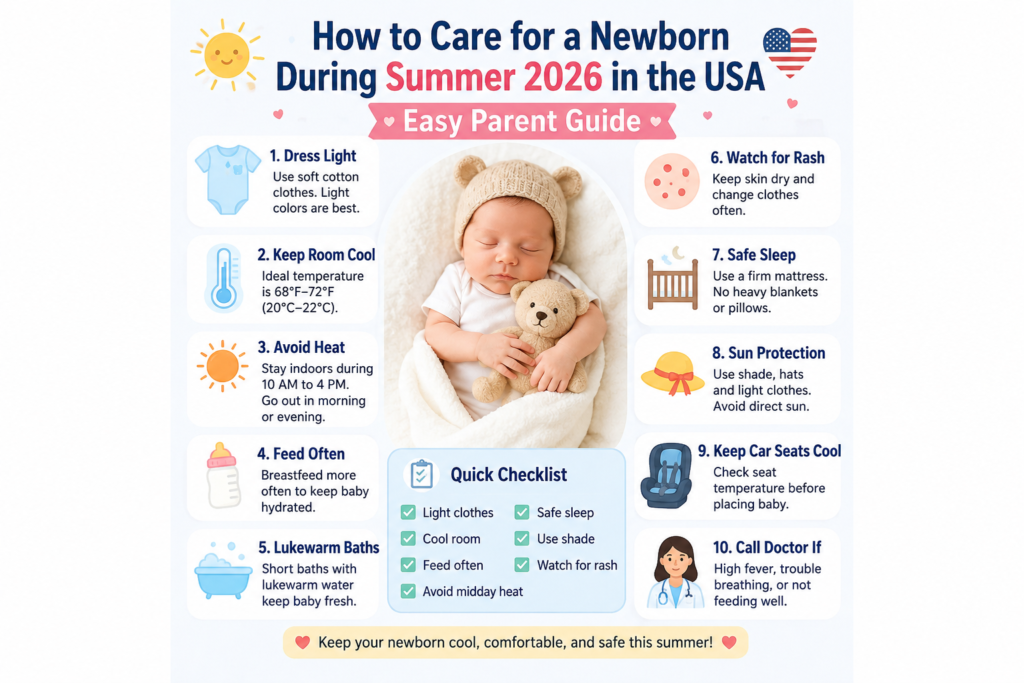
Summer can be difficult for newborn babies because they cannot control body temperature like adults. Hot weather may increase the risk of overheating, skin irritation, dehydration, and discomfort. Parents in the USA should take extra care during warmer months.
This guide shares simple newborn summer care tips for 2026.
Why Summer Care Is Important for Newborns
Newborn babies have sensitive skin and small bodies. They lose water quickly and may get uncomfortable in hot temperatures.
Signs your baby may feel too hot:
- Sweating
- Red skin
- Fast breathing
- Fussiness
- Warm chest or neck
1. Dress Your Newborn in Light Clothes (Summer Care)
Choose:
✅ Soft cotton clothes
✅ Loose-fitting outfits
✅ Light colors
✅ Breathable fabrics
Avoid:
❌ Thick blankets
❌ Heavy clothing layers
❌ Synthetic fabrics
A diaper and light onesie may be enough indoors.
2. Keep Room Temperature Comfortable
The ideal room temperature for newborn sleep is usually:
68°F–72°F (20°C–22°C)
Use:
- Fans (not directly on baby)
- Air conditioning if needed
- Curtains to block sunlight
3. Protect Your Baby From Heat
Avoid outdoor trips during:
10 AM to 4 PM
This is often the hottest time.
Go outside:
- Early morning
- Evening hours
Always keep shade for your baby.
***Want to learn more about New Born Care***
4. Feed More Often
Breastfed babies may want to feed more during hot weather.
Frequent feeding helps:
- Comfort baby
- Support hydration
- Reduce fussiness
Parents should watch feeding patterns carefully.
5. Give Safe Summer Baths
A lukewarm bath can help babies feel comfortable.
Tips:
- Keep bath short
- Dry skin gently
- Moisturize if skin becomes dry
Avoid very cold water.
6. Watch for Heat Rash
Heat rash may appear as:
- Small red bumps
- Skin irritation
- Rash around neck or diaper area
To help prevent it:
- Keep skin dry
- Change clothes often
- Avoid overheating
7. Practice Safe Sleep During Summer
For safe sleep:
✔ Place baby on back
✔ Use firm mattress
✔ Avoid thick blankets
✔ Avoid pillows in crib
Cool and simple sleep setups are safer.
8. Use Sun Protection Carefully
Babies younger than 6 months should avoid direct sunlight when possible.
Use:
- Shade
- Light clothing
- Hats for outdoor walks
Quick Summer Checklist for Newborn Parents
✓ Light cotton clothes
✓ Cool room temperature
✓ More frequent feeding
✓ Avoid midday heat
✓ Safe sleep practices
✓ Shade outdoors
✓ Watch for heat rash
Check Car Seat Temperature Before Putting Baby Inside
UV Exposure Can Happen Even in Shade
Watch for Early Signs of Overheating
UV Exposure Can Happen Even in Shade
Bahut parents sochte hain ki shade me baby safe hai, lekin UV rays reflected surfaces (concrete, water, sand) se bhi aa sakti hain.
Frequently Asked Questions (FAQs)
1. How hot is too hot for a newborn?
Temperatures above comfortable indoor ranges may increase overheating risk. Watch your baby’s behavior and clothing.
2. Should newborns drink water in summer?
Parents should follow pediatric guidance. Feeding routines are important for hydration.
3. Can newborns sleep with a fan?
Yes, but avoid direct airflow on the baby.
4. What clothes are best for newborns in summer?
Lightweight cotton clothes are usually preferred.
5. How can I tell if my newborn is too hot?
Check chest or neck warmth, sweating, fussiness, and fast breathing.
Final Thoughts
Summer 2026 may bring warmer temperatures in many areas of the USA. Keeping your newborn cool, comfortable, and well cared for can help support safer and happier days.
Small changes like light clothing, cooler rooms, and careful outdoor timing can make a big difference.
Have more questions about newborn care? Reach out to us through the comments — we’re happy to help.
Every newborn deserves a safe, cool, and comfortable summer. Small daily care habits can help protect your baby during hot weather and support healthy growth in the early months.
If you have any questions about newborn care, summer baby safety, or parenting tips, please feel free to write to us anytime. We’re always here to support and guide you with helpful information for your baby’s well-being.